
Can Laparoscopy Detect Endometriosis That Scans Miss?
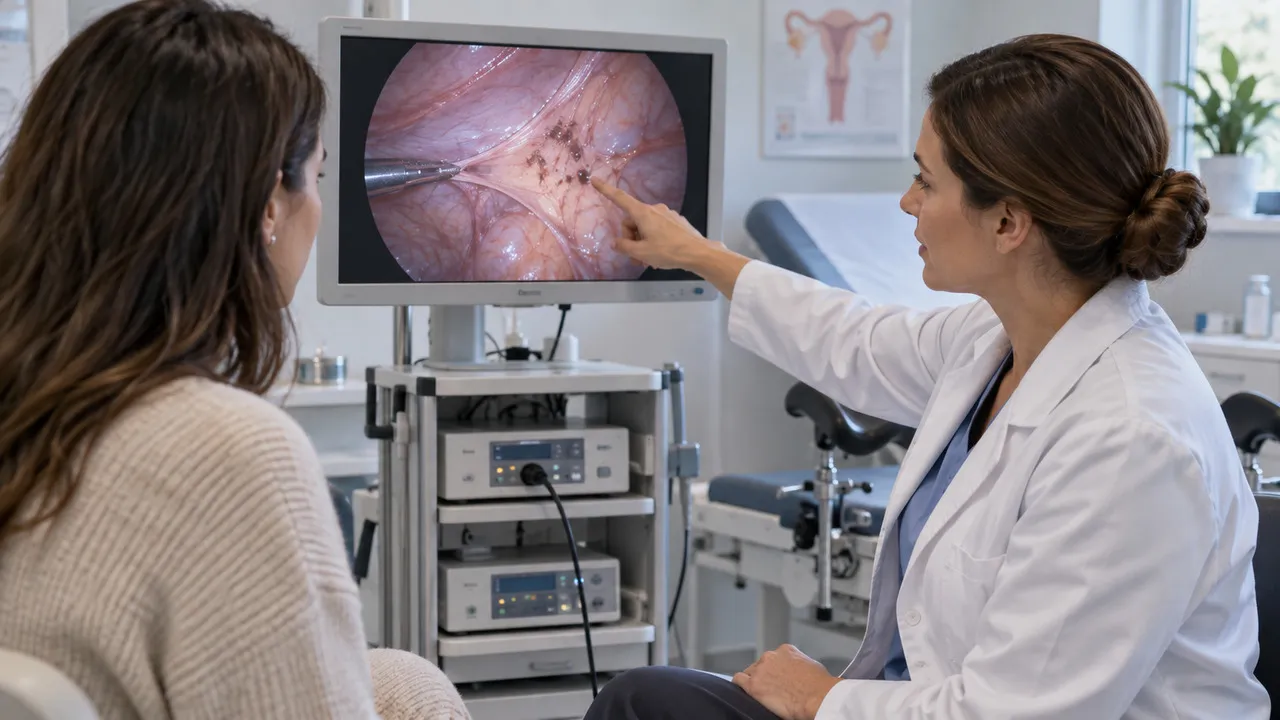
Endometriosis can be difficult to diagnose because its symptoms may overlap with other gynecological conditions. Many women experience painful periods, pelvic pain, pain during intercourse, bloating, or difficulty becoming pregnant without knowing the underlying cause. Ultrasound and MRI can provide useful information, but they may not always detect every area of endometriosis.
This raises an important question: Can laparoscopy detect endometriosis that scans miss? In many cases, yes. Laparoscopy allows a gynecologist to directly examine the pelvic organs and identify endometriosis lesions that may not be clearly visible on imaging.
Dr. Mansi Gupta can help women with persistent pelvic pain, suspected endometriosis, or unexplained fertility concerns understand whether further evaluation with laparoscopy may be appropriate.
What Is Endometriosis?
Endometriosis is a condition in which tissue similar to the lining of the uterus grows outside the uterus. It may develop around the ovaries, fallopian tubes, pelvic lining, bowel, bladder, or other nearby structures.
This tissue can respond to hormonal changes during the menstrual cycle, leading to inflammation and irritation. Over time, endometriosis may contribute to scar tissue, adhesions, ovarian endometriomas, and changes in the normal anatomy of the pelvis.
Symptoms vary considerably. Some women have severe pain, while others may have few or no symptoms.
Can Ultrasound Detect Endometriosis?
Ultrasound is often one of the first imaging tests used when endometriosis is suspected. It can help identify certain findings, including ovarian endometriomas and some forms of deep endometriosis.
However, a normal ultrasound does not necessarily mean that endometriosis is absent.
Small or superficial endometriosis lesions may be difficult to see on an ultrasound. The result can also depend on the type of ultrasound performed and the experience of the person interpreting the images.
Therefore, symptoms and clinical examination remain important even when an ultrasound does not show obvious endometriosis.
Can MRI Miss Endometriosis?
MRI can provide detailed images of the pelvis and may be particularly useful when deep endometriosis is suspected. It can help doctors assess certain areas and understand the extent of disease before treatment.
However, MRI may not identify every type or location of endometriosis. Small superficial lesions can remain difficult to detect, and a normal MRI does not completely rule out the condition.
This is one reason why some women continue to experience significant symptoms despite having reassuring imaging results.
How Can Laparoscopy Detect What Scans Miss?
Laparoscopy is a minimally invasive surgical procedure that allows the gynecologist to look directly inside the abdomen and pelvis.
During the procedure, small incisions are made, and a thin camera called a laparoscope is inserted. The surgeon can examine areas such as the uterus, ovaries, fallopian tubes, pelvic lining, and surrounding structures.
Instead of relying only on images produced by an ultrasound or MRI, laparoscopy provides a direct view of the pelvic tissues.
This can allow the surgeon to identify lesions, adhesions, scar tissue, endometriomas, and other changes associated with endometriosis that may not have been visible on previous scans.
What Does Endometriosis Look Like During Laparoscopy?
Endometriosis can have different appearances. Lesions may appear as dark, reddish, white, or subtle areas on the pelvic tissues. Some disease may also cause thickened tissue or adhesions that distort the normal anatomy.
Because endometriosis can vary in appearance and location, recognizing subtle disease requires appropriate surgical expertise.
Laparoscopy can also help assess how endometriosis has affected the pelvic organs and whether adhesions are present.
Can Laparoscopy Treat Endometriosis At The Same Time?
One of the advantages of laparoscopy is that diagnosis and treatment may sometimes be performed during the same procedure.
If endometriosis is identified, the surgeon may be able to remove or destroy visible lesions and release adhesions, depending on their location, depth, and severity.
Treatment decisions are individualized. Some lesions may require careful excision, particularly when they involve areas close to important organs or structures.
The goal is not simply to identify endometriosis but to manage the disease while protecting healthy surrounding tissue as much as possible.
When Might Laparoscopy Be Considered?
Laparoscopy is not automatically required for every woman with pelvic pain. Many patients can initially be evaluated through their symptoms, examination, ultrasound, MRI, and other tests.
However, a gynecologist may consider laparoscopy when symptoms remain significant despite initial evaluation or treatment.
It may be discussed when a woman has:
- Persistent or severe pelvic pain
- Painful periods that interfere with daily activities
- Pain during or after intercourse
- Chronic pelvic pain with no clear explanation
- Suspected endometriosis despite normal imaging
- Endometriosis-related ovarian cysts
- Difficulty becoming pregnant when endometriosis is suspected
- Adhesions or other pelvic abnormalities requiring evaluation or treatment
The decision depends on the individual's symptoms, medical history, fertility goals, previous treatments, and imaging findings.
Does A Normal Scan Rule Out Endometriosis?
No. A normal ultrasound or MRI can be reassuring, but it does not always exclude endometriosis.
This is particularly relevant when symptoms strongly suggest the condition. Some forms of endometriosis are easier to identify on imaging than others.
If symptoms persist, it is worth discussing the findings with a gynecologist rather than assuming that a normal scan means there is no underlying problem.
What Happens Before A Laparoscopy?
Before laparoscopy, your doctor will review your symptoms, medical history, medications, previous treatments, fertility goals, and imaging results.
The procedure is generally performed under anesthesia. Your doctor will explain how to prepare, what to expect during recovery, and whether any additional tests are needed beforehand.
It is also important to discuss whether the purpose of the procedure is diagnostic, therapeutic, or both.
What Is Recovery Like After Laparoscopy?
Recovery depends on what is found and whether treatment is performed during the procedure.
Because laparoscopy uses small incisions, recovery is generally shorter than with traditional open abdominal surgery. Some women may experience temporary abdominal discomfort, bloating, tiredness, or shoulder discomfort caused by the gas used during the procedure.
Your doctor will provide specific instructions regarding activity, wound care, medications, and follow-up.
Why Early Evaluation Matters
Endometriosis is a chronic condition, and symptoms can sometimes be present for years before a diagnosis is made. Persistent pain should not simply be accepted as a normal part of menstruation.
If your symptoms affect your work, relationships, daily activities, or fertility, discussing them with a gynecologist can help identify appropriate next steps.
A detailed assessment can help determine whether your symptoms are consistent with endometriosis or another condition that may require different treatment.
Get The Right Evaluation For Pelvic Pain
A normal scan does not always tell the complete story when endometriosis is suspected. When symptoms continue despite reassuring imaging, a detailed gynecological evaluation can help determine whether additional investigation is needed.
Laparoscopy provides a direct view of the pelvis and, when appropriate, may allow diagnosis and treatment during the same procedure. If you are experiencing persistent pelvic pain, painful periods, or unexplained fertility concerns, Dr. Mansi Gupta can help you understand your symptoms and explore the next appropriate step in your care.
FAQs
Q: Can laparoscopy find endometriosis that an ultrasound misses?
A: Yes. Ultrasound may not detect small or superficial endometriosis lesions. Laparoscopy allows the surgeon to directly examine the pelvic organs and tissues, which can help identify disease that was not clearly visible on imaging.
Q: Can MRI completely rule out endometriosis?
A: No. MRI can be useful for identifying certain forms of endometriosis, particularly deep disease, but some lesions may remain difficult to detect. A normal MRI does not completely exclude endometriosis.
Q: Is laparoscopy the only way to diagnose endometriosis?
A: No. Doctors may use symptoms, pelvic examination, ultrasound, MRI, and other clinical information when evaluating suspected endometriosis. Laparoscopy provides direct visualization and may also allow treatment during the same procedure.
Q: Can endometriosis be treated during laparoscopy?
A: In suitable cases, visible endometriosis lesions and adhesions can be treated during the same laparoscopic procedure. The specific approach depends on the location and extent of the disease.
Q: Should I have laparoscopy if my scan is normal but I have severe pelvic pain?
A: A normal scan does not automatically rule out endometriosis. Whether laparoscopy is appropriate depends on your symptoms, examination, medical history, fertility plans, and previous treatment. Discussing these factors with a gynecologist can help determine the next step.
Q: Is laparoscopy a major surgery?
A: Laparoscopy is minimally invasive and uses small abdominal incisions. However, it is still a surgical procedure performed under anesthesia, and recovery depends on what is found and whether treatment is carried out during the procedure.
Q: Can endometriosis affect fertility?
A: Endometriosis can be associated with difficulty becoming pregnant in some women. It may affect the ovaries, fallopian tubes, pelvic anatomy, or cause inflammation and adhesions. Fertility concerns should be discussed individually with a gynecologist.